
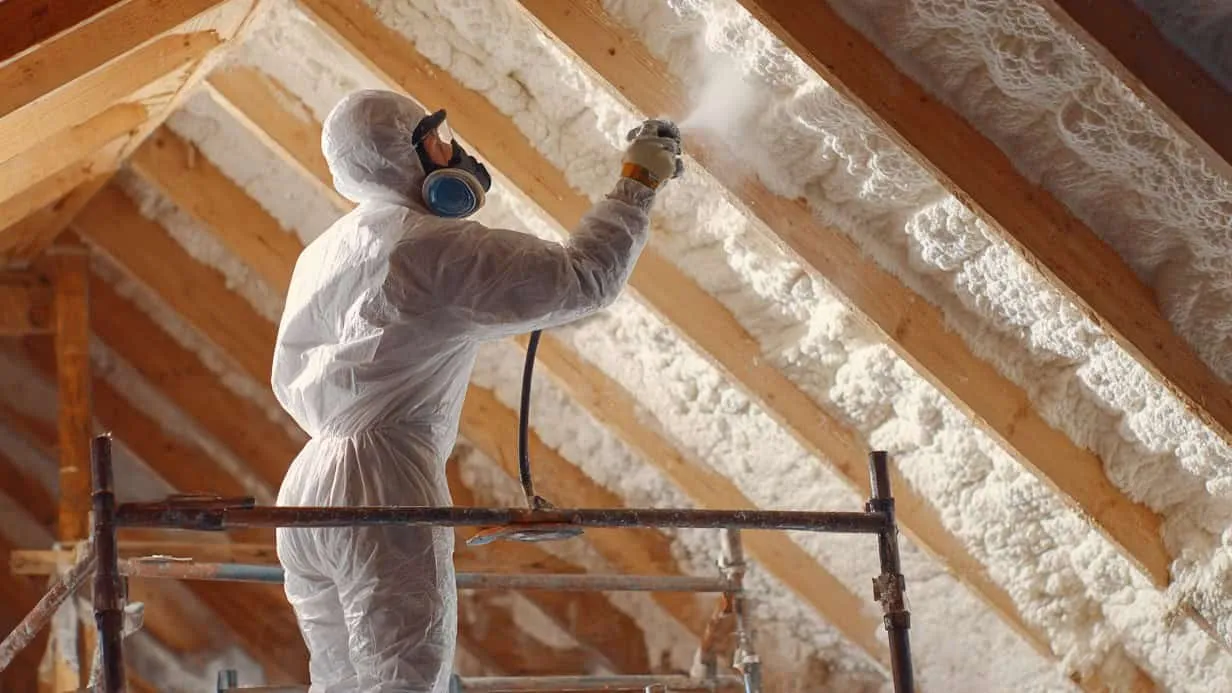
Spray foam insulation is the premier choice for Minneapolis properties because it provides both a superior R-value and a seamless air seal that traditional fiberglass cannot match. By expanding into every gap, it prevents the “stack effect” common in Minnesota winters, significantly reducing heating and cooling costs while protecting the structure from moisture and ice dams. For local expertise, NES Building Solutions specializes in applying both open-cell and closed-cell solutions tailored to the Twin Cities’ extreme temperature swings.
The extreme climate in the Twin Cities demands more than simply standard insulation. It demands a thermal envelope that is high-performance. In Minneapolis, the winters frequently drop below 0 degrees, while summers can be humid and heavy; the home’s insulation is the primary protection method. Conventional methods for insulation usually fail because they permit air infiltration to pass through the material, which can lead to the formation of cold spots, drafts, and a rise in energy costs. NES Building Solutions understands that contemporary homeowners require solutions that address the issues of thermal resistance as well as airtightness.
The Technical Advantage of Spray Foam Insulation Services
In order to understand how spray foam is now the standard for the industry in the field of building envelopes, it is necessary to look into the science behind building envelopes. In contrast to batts and blown-in cellulose, the spray foam is a liquid polyurethane that increases in size by a large amount over its size upon application. This is the reason why it produces a custom-fit insulation layer which fills each space, crevice and electrical duct in a wall cavity or attic.
Understanding Closed-Cell vs. Open-Cell Technology
In the event of seeking Spray Foam Insulation Services, it is essential to select the appropriate material specifically for the area in your Minneapolis residence.
- Closed-Cell Spray Foam: It’s a tough and rigid product that has an extremely high R-value (typically about 6.5 or 7.0 for every inch). It’s water-resistant and can be used to strengthen the structural integrity of the structure. This is the best choice for crawl areas in Minnesota.
- Open-Cell Spray Foam: It’s a light, more flexible and durable foam. It has a lower R-value per square inch (around 3.5 or 3.8). It also provides outstanding sound absorption and is more economical for attic and interior wall ceilings, where space isn’t so constrained.
The Power of the Air Seal
One of the most significant causes for energy loss that is causing energy losses in Minneapolis can be air leakage. Both cellulose and fiberglass can be described as “air-permeable,” meaning air moves through these materials. It is also “air-impermeable.” That means that it forms the appearance of a solid barrier, which stops the cold Minnesota air from entering and the expensive heat from flowing out. This air seal can be essential for comfort, more so than the R-value itself.
Environmental Impact and 2026 Sustainability Standards
The modern formulations of spray foam have changed substantially. Here at NES Building Solutions, we prefer products that have low Global Warming Potential (GWP) blowing agents. They are eco-friendly and make sure that, while saving money on energy bills at home, you’re also minimizing your environmental footprint, which is in keeping with the newest sustainable building guidelines.
Realizing the Long-Term Benefits of Spray Foam Insulation Minneapolis
Making the investment in spray Foam insulation in Minneapolis is a smart decision for any homeowner. It is the Twin Cities’ real estate market is increasingly promoting energy-efficient homes. The functional advantages of foam insulation can be felt right away in every space in the home.
Dramatic Reduction in Monthly Utility Bills
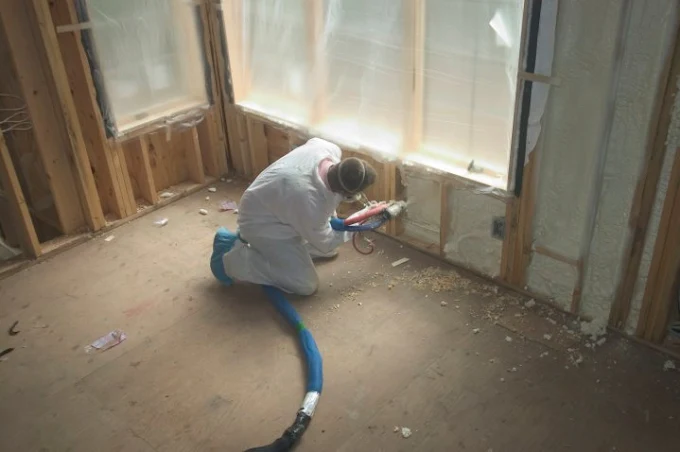
The first feedback that homeowners experience after spray foam install is a reduced energy bill. Many times, Minneapolis residents see a decrease of 30 to 50% off the cost of cooling and heating. As the HVAC system isn’t required to work as hard to fight drafts and stale air, it lasts for longer and will save you the cost of replacements and repairs over the course of time.
Eliminating the Threat of Ice Dams
Ice dams have become a regular problem for Minneapolis homeowners. They occur when hot air leaks into the attic and melts the snow that is on the roof. It is then recondensed on the edges. Since spray foam forms an airtight sealing on the floor of your attic or roofline, it keeps warm air inside your home and helps keep the rooftop deck cool. This eliminates the principal reason for ice damming and guarding gutters and shingles from damage during winter.
Improved Indoor Air Quality and Comfort
An insulated and well-insulated home is an environment that is cleaner. Spray foam blocks the entry of pollutants from the outdoors, dust and allergens. If you live in a city such as Minneapolis, which is where seasonal allergies are common home that filters these pollutants by naturally constructing an airtight enclosure can be a significant health benefit. In addition, the absence of drafts ensures that temperatures remain constant between the floor and the ceiling.
Superior Sound Dampening for Urban Living
A city that is bustling, such as Minneapolis, requires dealing with the noise of traffic, sirens and other activities in the neighborhood. The open-cell spray foam particularly it is particularly fantastic as a noise absorber. It blocks the propagation of loud noises. This makes your house an oasis of peace regardless of whether you are near an edgy thoroughfare or a light railway line.
Strategic Application Areas for Maximum Efficiency
For the best results, the insulation you install it is essential to concentrate on areas in which the loss of heat is at its highest. NES Building Solutions takes a comprehensive view of your building in order to pinpoint these weak areas.
Attic Insulation and the “Hot Roof” Design
Attics are traditionally ventilated in order to maintain their cool. In contemporary Minneapolis design, it is the “hot roof” or “hot roof” or unvented attic style that is becoming more popular. In the event that foam is sprayed directly on the roof’s underside deck, an attic transforms into an air-conditioned area. This is especially beneficial if HVAC pipes are in the attic area, since they no longer sit within extreme temperatures.
Basement and Crawl Space Waterproofing
Minnesota soils can be moist, and basements are susceptible to water infiltration. Spray foam that is closed-cell serves as a vapor reducer and stops moisture from leaking through the rim joints and walls of the basement. It also stops the growth of mildew and mold, which can cause damage to the structure as well as family well-being.
Over-the-Garage Rooms and Cantilevers
The garages that are located above rooms are often difficult to heat in Minneapolis. It is typically due to inadequate air sealing on the ceiling of garages. Spray foam can be the sole product that is able to effectively fill the voids and transform a formerly “freezing” room into a relaxing room or office.
Commercial and Industrial Retrofitting
Beyond homes for residential use, NES Building Solutions provides massive-scale insulation for commercial structures. When these types of properties are in use, the structural support offered by closed-cell foam may prove to be an important asset in making large-scale buildings more resilient to the heavy snow load that is which are common during Minnesota winters.
Why Professional Installation is Essential for Spray Foam Success
There are DIY kits to make your own Spray foam is an extremely chemical substance that requires expert handling in order to assure security and efficiency.
Precision Mixing and Temperature Control
The two parts of the spray foam have to be mixed with precise pressures and temperatures to be able to mix properly. If the mix isn’t correct, then the foam might not stick properly or release smells. The professional rigs utilized in NES Building Solutions are computer-controlled to guarantee a flawless “off-ratio” free application every time.
Safety Protocols and Ventilation
In the course of applying Technicians wear respirators with full faces and other protective equipment. They also oversee the ventilation inside the residence in the “curing” phase, ensuring that the house is safe to re-enter within the agreed duration.
Experience with Minneapolis Building Codes
Local building codes for Minneapolis contain specific rules for the use of thermal barriers as well as ignition obstacles over insulation. Professionals know what you need to do in order to make sure your house passes the examination and is protected in the event of a fire.
Partnering with NES Building Solutions for a Lifetime of Comfort
The weather in Minneapolis does not give homeowners any excuses for the efficiency of their homes. With sub-zero winters as well as the hot summers, it is your insulation that plays a crucial role in the efficiency of your home. If you select Spray Foam Insulation Minneapolis, you’ll be choosing a durable option that doesn’t shrink or settle down, nor lose its R-value with time.
NES Building Solutions is dedicated to helping residents of the area to master their indoor spaces. No matter if you’re creating a brand new house or retrofitting an existing North Loop loft, our team is equipped to use the appropriate foam to do the task. Don’t let your hard-earned cash go to waste on your ceiling and walls. Make the investment in spray foam to feel the level of security and cost savings that only a fully airtight and secure home will provide.
FAQ’s
How much can I save with spray foam insulation in Minneapolis?
Homeowners in Minneapolis typically see a 30% to 50% reduction in their monthly heating and cooling costs after switching to spray foam due to its superior air-sealing properties.
Does spray foam insulation prevent ice dams?
Yes. By creating an airtight barrier at the roofline, spray foam prevents warm air from reaching the roof deck, which is the primary cause of snow melting and refreezing into ice dams.
Is closed-cell or open-cell foam better for Minnesota homes?
Closed-cell is generally better for moisture-prone areas like basements and rim joists, while open-cell is often used in attic ceilings and interior walls for soundproofing and cost-efficiency.
How long does spray foam insulation last?
Spray foam is a permanent insulation solution. Unlike fiberglass, it does not settle, sag, or lose its R-value, lasting for the entire lifespan of the building.
Is spray foam insulation eco-friendly?
Modern spray foam used by NES Building Solutions uses low-GWP blowing agents and significantly reduces a home’s carbon footprint by drastically lowering energy consumption.