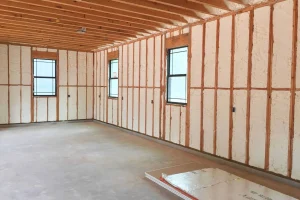

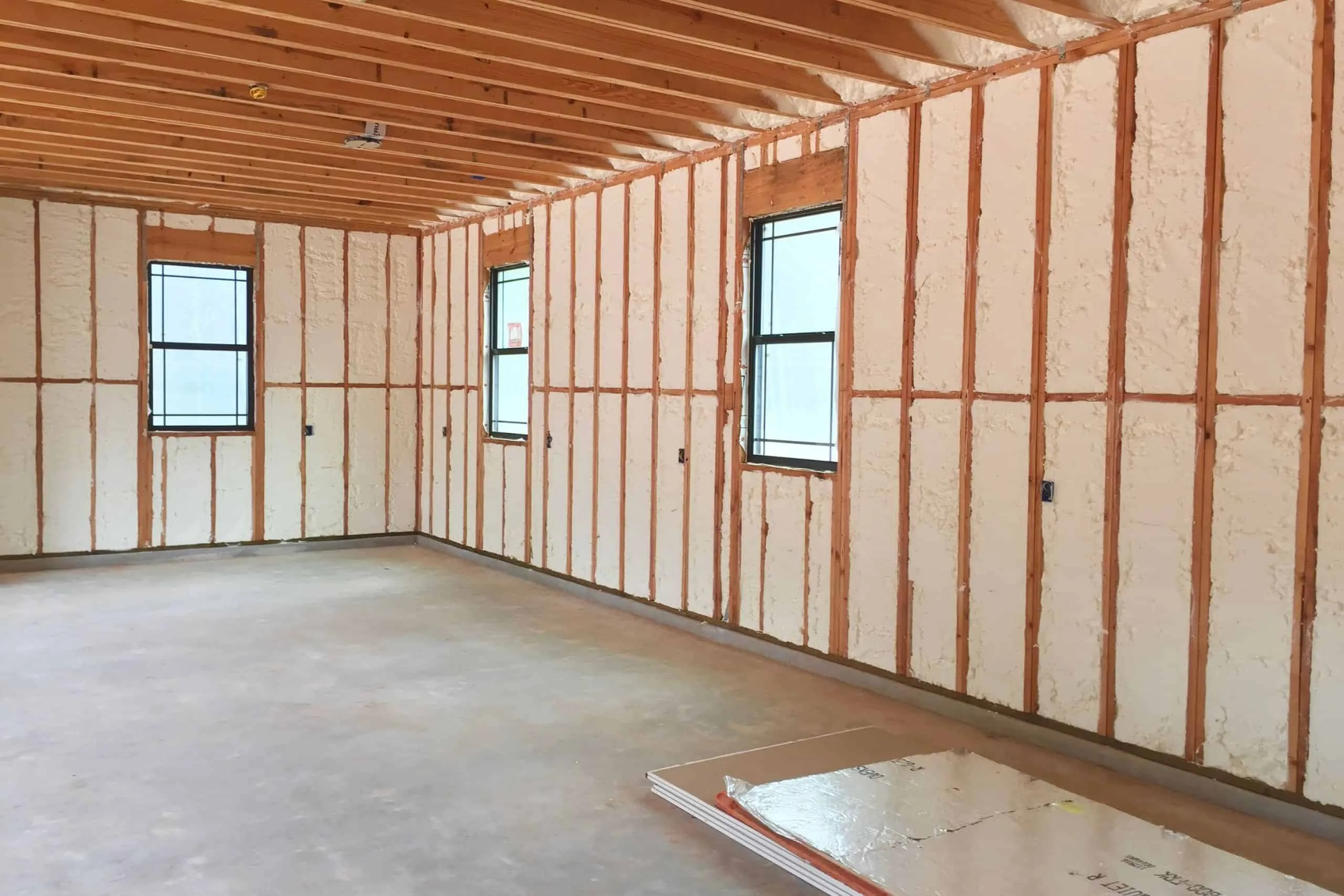
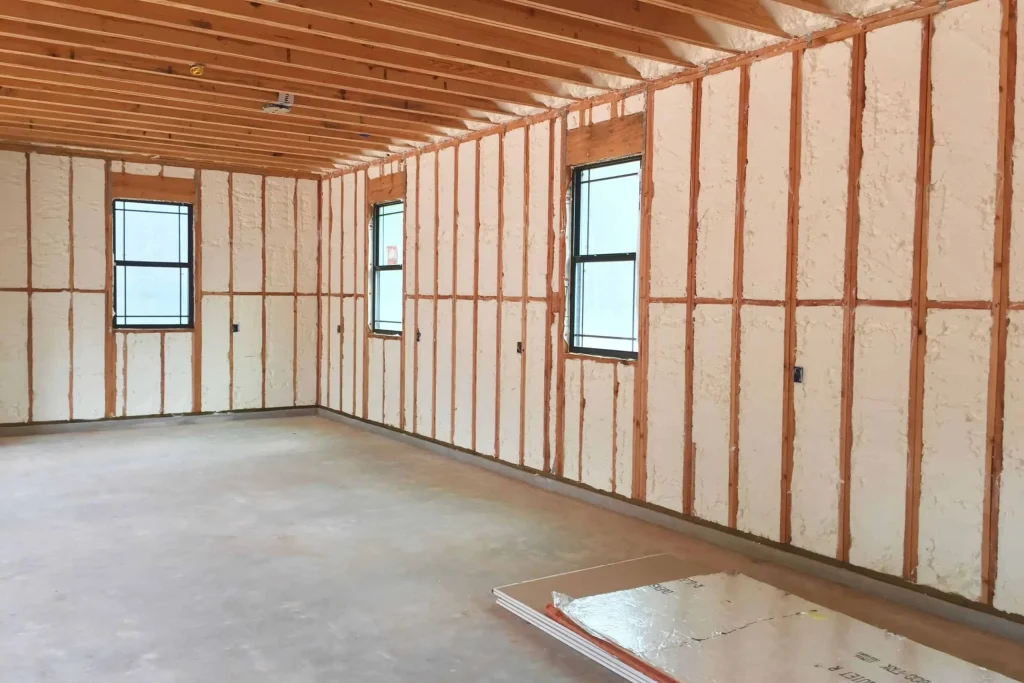
Spray Foam Insulation has emerged as an energy-efficient and sustainable option for businesses and homeowners. When compared with more traditional materials like fiberglass or cellulose insulation, its superior thermal resistance as well as air sealing properties make it the superior option. Durable over time and capable of expanding to fill gaps, makes spray foam an attractive solution to lower energy costs, increase indoor comfort levels or boost building efficiencies.
What Are My Options For Spray Foam Insulation?
Spray foam insulation consists of two components: polyol resin and isocyanate. When combined, these ingredients expand between 30–60 times their original size upon being applied to surfaces such as gaps. As such, when spray foam is sprayed onto gaps, it forms dense foam without leakage of moisture into buildings or homes and thus forms dense sealant foam insulation that adheres tightly without moisture intrusion or air leakage issues.
It has remarkable expansion properties which ensure it fills even tiny crevices to seal air leakage or intrusion issues inside buildings/homes from air leakage/moisture intrusion issues caused by air leakage/moisture intrusion issues or air leakage intrusion from outside sources allowing no air leakage/moisture intrusion issues by building materials expanding 30 to 60 times its initial size when spray foam insulation material expansion properties make this substance ideal.
Closed-cell foam spray comes in two varieties – open-cell and closed-cell – each providing different characteristics when it comes to soundproofing applications in interior environments and soundproofing purposes, respectively. However, closed-cell has greater R-value per inch ratings when compared with open-cell alternatives – ideal for basements, exterior walls or other locations prone to moisture exposure, like basements, exterior walls, or anywhere moisture might exist in large quantities. Moisture proof paint offers long-term moisture protection in basements or exterior walls, or any locations where moisture may exist, such as basements where moisture could occur in abundance, giving long-term moisture protection against possible issues arising in these locations where moisture may exist in sufficient quantity or presence in excessive quantities.
Spray Foam Insulation Offers Multiple Advantages
Foam insulation stands out among many benefits as an energy-saving product, creating airtight seals to block heat transfer between systems while decreasing utility bills, carbon footprint and costs simultaneously. Furthermore, its allergen-blocking properties improve indoor air quality by keeping dust mites, pollen and allergens out – as well as its moisture-resistant qualities helping combat mold growth, which is common in humid climates. It offers cost-effective and environmentally friendly insulation alternatives while increasing energy efficiency with air-tight seals against heat transfer between systems, while cutting bills by decreasing utility bills while simultaneously.
In terms of cost and carbon footprint reduction and cost, spray foam stands out as cost-effective and environmental friendly insulation option that cuts costs while simultaneously improving energy efficiency by sealing tight airtight air tight seals around systems to cut heat transfer between systems thereby cutting utility costs carbon footprint reduction while decreasing carbon footprint by cutting carbon footprint reduction costs while simultaneously.
Furthermore, its allergen blocking properties help improve quality indoor air by keeping dust mites, pollen allergens out; similarly, its moisture-resistant properties help combat the growth of mold, which often arises in humid climates, thereby saving valuable resources that would otherwise go towards fighting it being produced from manufacturing its use.
Spray foam insulation stands out as one of the more robust insulation solutions compared to more traditional options that may sag, compress, or degrade over time. By contrast, spray foam retains its shape and efficiency for many years and serves as an economical investment, helping prevent replacement or repairs quickly as well as increasing structural strength and overall stability of buildings.
Spray Foam Insulation Applications
Spray foam insulation has many applications in residential construction. Homeowners often use it in basements, crawlspaces, and attics to create an unbroken thermal barrier and lower energy costs. Homeowners generally experience improved comfort from less draftiness and more evenly distributed indoor temperatures because spray foam covers large areas rapidly, or is an improvement, especially for older homes requiring minimal renovation.
Spray foam insulation is being selected increasingly by professional contractors and homeowners alike, primarily due to its rapid coverage capabilities. Commercial or industrial buildings, as well as offices, commonly apply spray foams because of how quickly they can pay back; it is even being employed in retrofitting older structures to improve performance without a massive renovation effort.
Impact Assessment and Sustainable Development Strategies
With increasing concern around climate change, spray foam insulation has gained visibility as a viable way to reduce energy consumption and carbon emissions from energy production. Reducing heating and cooling energy consumption ultimately reduces greenhouse gas emissions from production. Some reputable manufacturers are producing spray foams with sustainable blowing agents or content components, etc., to further the sustainability profile. Once set, it is safe and non-toxic for residents occupying the space.
Spray foam insulation might cost more initially, but its long-term advantages typically outweigh this initial expense. Homeowners can anticipate lower energy bills and less maintenance expenses, not to mention increased property values–along with potential returns within several years, making this an appealing long-term residence solution.
Spray foam insulation is an innovative and environmentally responsible method for building insulation, providing businesses and homeowners who value energy savings, durability, comfort, and reduced environmental impact with an innovative alternative to spray foam insulation. Offering businesses and individuals alike a green option with significant potential for cost savings, as well as lower environmental impact due to its ability to seal air leaks, resist moisture build-up, and provide durable long-term performance, it provides an innovative opportunity for that next building insulation project.
Blown-In Insulation Is an Energy Saving and Comfort-Creating Option
Insulation has become an essential element of modern construction and renovation as energy costs soar, prompting homeowners to look for ways to both increase comfort while cutting expenses. Blown-in Insulation Bloomington MN stands out as one of the many available solutions due to its ease of installation process; whether used on new builds or retrofitted older homes, it provides cost-effective energy-efficiency and comfort solutions that boost indoor living comfort while improving energy efficiency.
What Are My Options For Blown-in Insulation?
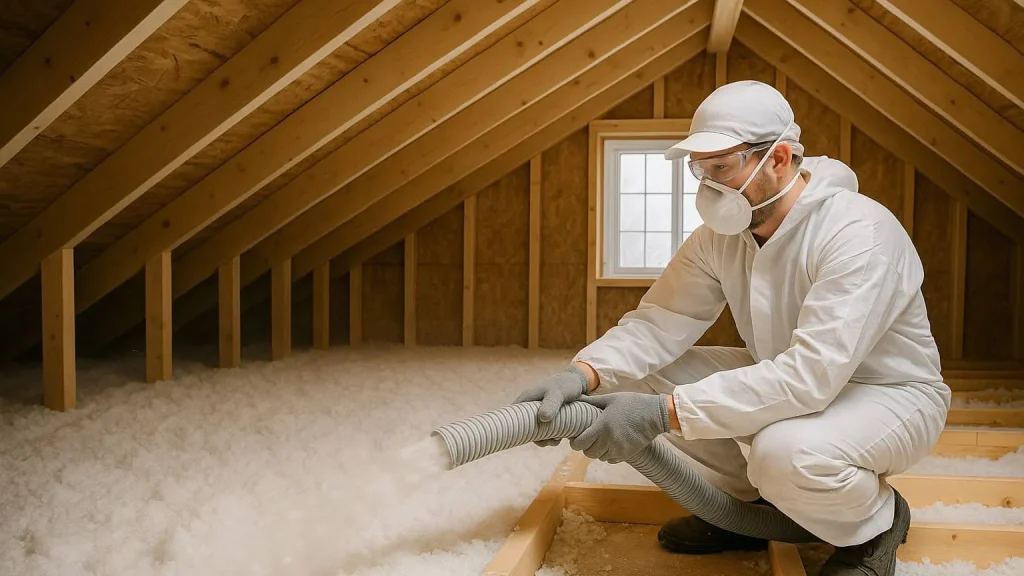
Blown-in insulation (often known as loose fill insulation) is an efficient means of insulating buildings that involves blowing or spraying tiny particles of insulation into wall cavities, attics or other spaces using special machinery that injects these insulation particles directly. Common types include cellulose, fiberglass mineral wool insulation.
Blown-in insulation can fill in any gaps left behind by traditional batt insulation and better fit irregular spaces, making blown-in insulation particularly suitable for older homes where attics or walls might not be uniform in size. Blown-in insulation’s efficiency lies in being able to conform to spaces that may not be exactly circular! Blown-in insulation makes itself uniquely appropriate in these circumstances: no two spaces need the same size. This makes blown-in ideal in homes where walls do not conform uniformly!
Types of Blown-In Insulation and Uses
Cellulose insulation, made from shredded recycled paper that has also been treated with fire-retardant chemicals, is an environmentally friendly option that has great thermal and soundproofing properties. Fiberglass insulation is made from small fibers of glass that have been woven together to form lightweight, noncombustible panels that resist moisture intrusion, and can be used in attics and wall cavities as well.
Mineral wool offers outstanding fireproofing properties as well as sound-absorbing qualities, making it suitable for applications where safety or noise abatement is of primary concern. Each kind possesses specific advantages depending on budget or climate considerations, or specific property needs – usually selected based on these considerations or individual property specifications.
Blown-In Insulation Brings Many Advantages
Blown-in insulation installation offers many energy efficiency benefits for homeowners. Filling gaps and creating an ongoing thermal barrier helps decrease drafts and heat transfer while simultaneously decreasing cooling and heating costs throughout the year – leading to significant savings that make blow-in installation well worth your while as an investment decision.
Blowing-in insulation can improve indoor spaces by keeping them warmer during the winter and cooler during the summer, as well as by decreasing temperature fluctuations and soundproofing by dampening noise between rooms, as well as outside sources – this peace can greatly enhance the quality of life for families living in busy neighborhoods or multi-story houses.
Air blown insulation offers numerous distinct advantages during its installation process, from being easy and non-invasive to covering retrofit projects efficiently and rapidly. Professional installers typically complete projects within hours with minimal disturbance to residents or homes; additionally, this type of insulation’s unique application enables airflow-blow material to be directly onto existing insulation for retrofit projects.
Environmental Benefits
Many homeowners opt for blown-in insulation due to its environmental advantages. Insulation with recycled paper content can have as much as 86% recycled paper content, while also reducing greenhouse gas emissions from heating and cooling by approximately 40%, compared to using standard means of installation. Because its central focus lies with recycling materials and energy savings, blow-in insulation makes an appealing option for environmentally conscious homeowners.
Cost Considerations
The costs associated with blow-in insulation vary based on factors like material selection, the area covered by it and local costs for labor. Although initial investments might be greater than with fiberglass bats, savings on energy bills tend to outstrip initial expenditures over time, and many utility companies and government programs provide rebates or incentives for insulation upgrades, which further decrease expenses overall.
Blown-in insulation offers an effective and Eco-friendly means of improving comfort and energy performance within buildings and homes alike. Blown-in insulation is a desirable option for new construction and retrofit projects because of its ability to fill irregular-shaped spaces while providing both thermal resistance and sound attenuation benefits.
Unfortunately, not every project meets these high standards of success, and therefore, there will always be that one person who just won’t go away. Though its initial costs may be greater than other available alternatives, blown-in insulation offers long-term energy savings, comfort enhancement, and environmental impact mitigation, making it one of the smartest investments available to homeowners who prioritize performance, affordability and environmental responsibility in equal measures.
Blown-in insulation remains one of the leading choices available today, especially as energy efficiency and sustainable living take priority in homes and businesses alike. Spray foam insulation stands as one of the most efficient and eco-friendly insulation products that offer homeowners and business owners alike an effective energy savings strategy. Comparable with more conventional materials like fiberglass and cellulose insulation, spray foam offers superior thermal resistance, air sealing properties and long-term durability; its ability to expand and fill gaps makes it the superior solution when looking to reduce energy costs, increase comfort levels or enhance performance levels of their buildings.
What Are My Options For Spray Foam Insulation?
Spray foam insulation is a chemical product fabricated by mixing two components – polyol resin and isocyanate- which, once mixed together, form an expanding mixture that expands by 30-60 times its original liquid volume when sprayed onto surfaces or cavities, creating dense foam which adheres to surfaces or fills cavities. Spray foam’s unique ability to expand enables it to fill even small cracks and crevices, effectively sealing against air leakage and moisture intrusion.
There are two primary varieties of spray foam: open-cell and closed-cell. Open-cell foam is more lightweight and flexible compared to its counterpart; therefore, it should be preferred when choosing your foam. This makes it ideal for interior applications in which soundproofing is also desirable. On the other hand, closed cell provides higher R-value per inch ratings than its open cell equivalent and may therefore be beneficial in exterior walls, basements or any location prone to moisture intrusion.
Spray Foam Insulation Provides Many Advantages
One of the primary benefits of spray foam insulation is its outstanding energy efficiency. Spray foam insulation plays an invaluable role in helping lower utility costs and lowering our carbon footprint, by creating an airtight seal which impedes heat transfer while simultaneously permitting heating/cooling systems to function more effectively. The blocking of allergens and other particles like dust mites, pollens and pollutants helps to improve the overall indoor air quality and is achieved through the gaps in the building envelope.
Moisture-resistant properties reduce the likelihood of mold growth, which can be a problem in a climate with high humidity. Blocking allergens and dust mites improves indoor air quality by blocking allergens from entering through any gaps in the building envelope.
Moisture-resistant properties continue to help deal with allergens by blocking any allergens from entering through gaps in the building envelope. At the same time, the moisture-resistant properties also serve to limit potential mold growth and issues related to humidity by blocking allergens such as dust mites or pollens from entering through gaps in the building envelope; the moisture-resistant properties may help to ensure mold growth does not occur.
Spray foam insulation stands out as being highly resilient compared to more traditional forms, which often sag, compress, or degrade over time. By contrast, spray foam retains its shape and functionality for decades, making it a cost-efficient investment that reduces replacements or repairs while adding strength and improving the stability of buildings.
Uses of Spray Foam Insulation
Spray foam insulation has numerous applications for residential construction. Homeowners traditionally use it as a continuous thermal barrier in attics, crawl spaces, walls, and basements, and many find that they experience immediate comfort from improved drafts and more stable temperatures in indoor spaces. Commonly, in commercial property and industry, spray foam is used to insulate large surfaces quickly in warehouses, offices, and metal buildings. Even retrofitting older construction can often gain value from using spray foam insulation without incurring substantial renovations.
Environmental Impact and Sustainability
As climate change and environmental impact continue to be a worldwide concern, spray foam insulation has increasingly been recognized as a great cost-benefit efficiency and reduction in energy usage and carbon emissions in energy generation. Decreasing heating and cooling demands help lower greenhouse emissions from energy production, while many manufacturers now produce spray foams featuring Eco-friendly blowing agents or recycled content to further boost sustainability profiles. The first installation is chemical, but once in place, it is safe and harmless for the residents.
Spray foam insulation may be more expensive initially, but the long-term savings often exceed this initial price. The homeowner usually receives lower energy bills, lowered maintenance costs, and increased property value; some have reported they received their return on investment within just a few years, which is a positive for long-term living.
Spray foam insulation offers an Eco-friendly and modern solution for building insulation needs, offering energy savings, comfort, durability and reduced environmental impacts at once. Thanks to its ability to seal air leaks and resist moisture build-up while offering long-term performance benefits, homeowners and businesses seeking greater energy savings, comfort, durability or reduced environmental impacts alike will find spray foam an intelligent and innovative choice when searching for insulation options. Blown-In Insulation Is an Energy Saving and Comfort-Friendly Option
Insulation has become an essential element of modern construction and renovation as energy costs soar, and homeowners look for ways to both increase comfort while cutting expenses. Of all available insulation types, blow-in insulation stands out due to its versatility, efficiency and straightforward installation process; whether used on new builds or retrofitted older homes alike, it offers cost-effective energy-efficiency gains while increasing indoor comfort levels.
What Is Blown-in Insulation?
While on holiday in Spain, he saw some lovely beaches. So I made up my mind to wait. Blown-in insulation (commonly referred to as loose fill insulation) is an efficient means of insulating buildings that involves injecting small particles of insulation through special machinery into wall cavities, attics or any available spaces for insulation purposes – typically consisting of cellulose, fiberglass and mineral wool products as insulation particles.
Blown-in insulation fills any voids left by traditional batt insulation and fits irregular spaces better, making it especially helpful in older homes where walls might have different dimensions or attic spaces require filling with uneven insulation levels! Due to blown-in’s ability to conform to irregular spaces more closely than any other method of application, its use makes this method highly suitable for old houses where walls don’t always measure uniformly – something only blown-in insulation’s unique ability can do! This application makes blown-in insulation especially well-suited to this task!
Blown-In Insulation Types and Applications
Cellulose insulation is comprised largely of recycled paper products coated with fire retardants to achieve thermal and soundproofing properties, making it an eco-friendly material choice. Fiberglass insulation is made from an arrangement of small glass fibers, consolidated and formed to produce lightweight non-combustible panels, and does not allow for moisture passage. It is a popular choice in attics or walls, among many homeowners.
Mineral wool has the benefits of fire and noise absorption and would be the material of choice in situations where safety or noise attenuation are most important. Each type has its own benefits based on your budget, climate, or needs specific to properties, and are often decided based on your budget, climate or needs specific to that property.
Insulation Blown in Provides Advantages
Blown-in insulation installation offers many energy efficiency benefits to homes. By filling gaps and creating an uninterrupted thermal barrier, it reduces heat transfer, drafts and heating/cooling bills across the year – leading to significant savings on homeowner heating/cooling bills thanks to this cost-cutting measure – making blown-in insulation installation an invaluable investment for energy savings!
Blowing-in insulation increases indoor comfort by keeping rooms warmer during winter and cooler during summer with minimal temperature fluctuations. Furthermore, it acts as soundproofing by dampening noise between rooms as well as from external sources – this peace can greatly enhance family living in busy neighborhoods or multi-story homes.
Air blown insulation offers several distinct advantages during its installation process, from being quick and non-invasive to covering existing insulation retrofits easily and rapidly. Professional installers typically complete most projects within several hours without major disruption to a resident or their home, making air blown an excellent retrofit solution. In addition, the distinctive use of air blown – that is, blowing material straight over the top of existing insulation – makes air blown a good choice for retrofitting.
Environmental Benefits
A number of environmentally minded homeowners choose blown-in insulation based on its ecological benefits. Cellulose insulation can be made with as much as 86% recycled paper content and can cut the greenhouse gas emissions attributable to heating and cooling by up to 40%, based on energy use compared to traditional insulation types. Therefore, blown-in insulation is a compelling option. With both recycled content and energy savings at its heart, blown-in insulation makes an appealing option for eco-conscious homemakers.
Low Cost Considerations
Blown-in insulation installation costs can differ widely depending on several variables such as material selection, area coverage size and labor rates in your region. Each factor plays its part when calculating an accurate final price estimate. Although initial investments might be higher than with fiberglass batts, long-term energy bill savings usually outstrip them over time, and many utility companies and government programs offer rebates or incentives for upgrading insulation that further lower expenses overall.
Blown-in insulation provides an efficient and sustainable means for improving comfort and energy performance in homes and buildings alike. Due to its ability to adapt to irregular spaces while offering thermal resistance benefits as well as noise reduction properties, blown-in insulation remains one of the top choices for both new construction projects as well as retrofit projects alike.
Although initial costs may be more costly than alternatives available today, their long-term advantages of energy savings, comfort improvements and environmental impact mitigation make blown-in insulation one of the smartest investments available to homeowners seeking performance, affordability and environmental impact balance – continuing its position among their top choices available now.
———————-
Faqs:
What is spray foam insulation?
A two-part liquid that expands into foam, insulating and air-sealing cavities in one step.
Where is closed-cell foam best?
Rim joists, basements, crawlspaces, exterior walls, and tight spaces needing high R per inch.
What is blown-in insulation?
Blown-in insulation is loose fibers or small particles—typically cellulose, fiberglass, or mineral wool—installed with a blowing machine to fill attics, walls, and hard-to-reach cavities. It creates a continuous blanket with minimal gaps.
What materials are most common?
Cellulose (recycled paper treated with fire retardants), fiberglass (spun glass fibers), and mineral wool (rock or slag wool). Each differs in R-value per inch, density, moisture behavior, and sound performance.